
Overtime urgency grips Japan’s Ministry of Education as a high-ranking official faces a crisis: Antarctic icebreaker signals reveal abnormal liquid level fluctuations, suggesting a drastic, unexplained fuel consumption of 1,300 tons. Whispers of treason emerge as researchers’ actions deviate from their exploration mission, raising suspicions of secret activities and potential betrayal of national trust. The unexplained data points to an event that defies simple explanation, fueling intense debate and fear of systemic failure.
Hero of heart The amazing son in law complete
Chapter 7452
(Title: The Mystery of the Antarctic Signal: When Japan Suspected Mass Treason)
A high-ranking official from Japan’s Ministry of Education, Culture, Sports, Science and Technology, who usually follows a relaxed 9-to-5 workday, was surprisingly forced to work overtime today.
The atmosphere there was far from calm. They were engaged in a heated discussion inside a completely enclosed conference room. The main topic was the rapidly changing liquid level signals from their icebreaker far off Antarctica.
The person who first discovered the problem reported urgently:
“I personally believe this is a very serious matter. These people are hiding it from us and doing something in Antarctica.”
He continued his report with suspicion, “Furthermore, they are using all of Japan’s scientific research equipment, yet they are not carrying out the exploration mission issued by Japan. I have good reason to suspect that they have committed treason!”
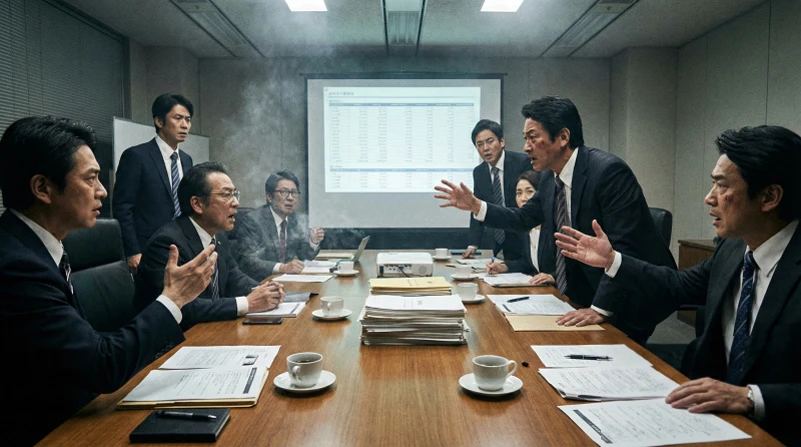
Hearing the report, the responsible official at the Ministry of Education, Culture, Sports, Science and Technology was completely confused.
Even though in his heart he knew the situation was serious, as the person in charge, his ego refused to acknowledge the severity of the situation.
No official wants such a serious systemic problem occurring right under their jurisdiction.
Their minds raced: Once reported, how would they be held accountable? What about their performance appraisals? Worst case scenario, they might even be removed from their positions.
So, he tried to speak in as gentle a tone as possible to calm the atmosphere:
“Mr. Watanabe, please don’t be too agitated. We have no other solid evidence to prove that our Antarctic expedition team has betrayed the country. Furthermore, the signal you mentioned only appeared for a brief moment. What if it was just a false alarm?”
“Impossible, absolutely impossible!” the reporter denied immediately.
He explained the technical details, “The liquid level signal is not a complex, high-precision device, nor is it a microcontroller. Its existence is solely to provide backup redundancy for all electronic systems.”
“So,” he continued, “the fact that the signal can show altitude data proves that the physical buoy there must have reached that altitude. Unless someone jumped into the tank, grabbed the buoy, sank rapidly for a short time, and then immediately let go, such fluctuations in the data are impossible.”
The deputy commander then asked him to confirm, “You said there was a 1,300-ton difference. Does that mean they’ve been using that much fuel behind our backs?”
“Yes!” the reporter answered clearly.
“Their previous fuel consumption curve was very linear, slow, and reasonable. Furthermore, the icebreaker was frozen in the ice, so they wouldn’t be running their main engines, only their generators. The fuel consumption rate couldn’t be this fast under any circumstances, unless there was a massive fuel leak.”
Hearing that, the Person in Charge said expectantly, “It’s probably just a fuel leak!”
For him, an oil leak—no matter how serious—was far better than a mass betrayal.
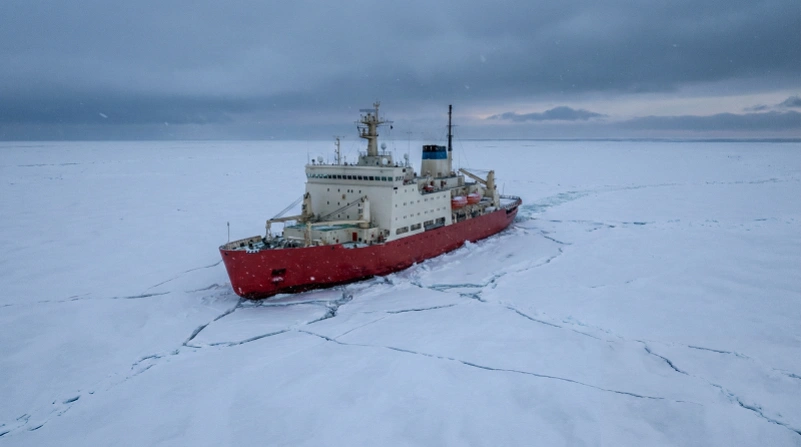
Even if the icebreaker exploded and was blown to pieces, it would still be much better than a scenario where the entire crew betrayed their country.
After all, no scientific expedition team in history had ever committed such a colossal act as that committed by an entire renegade crew; if news of this had gotten out, Japan would likely have become an international laughingstock.
However, the Deputy Commander who wanted to clarify this matter said firmly:
“If the consumption of over a thousand tons of fuel was truly kept secret from us, that proves they were conducting a large-scale operation. We still don’t know what they were really doing.”
He added his greatest fear, “What if they commit some kind of terrorist activity? What if they massacre members of scientific expeditions from other countries in Antarctica? If this were to come to light, our country would lose face in the eyes of the world!”
Everyone in the room immediately expressed their strong agreement.
The place is now frozen, isolated, and people usually can’t get in. What if these people really go crazy and cause trouble there?
Besides, everyone knows the rules of the game: the person directly responsible for a major issue like this will bear primary responsibility, and the top leader will bear secondary responsibility.
Therefore, everyone hopes an investigation can begin immediately to prevent the situation from worsening. Otherwise, everyone in this room could lose their jobs.
The person in charge also almost fainted from the pressure.
He asked everyone desperately, “Can you help me figure something out? Under what circumstances could dozens of scientific expedition team members from different teams, units, and companies simultaneously betray their country?”
Even if you had eight brains, you still wouldn’t be able to solve this puzzle.
This is a mixed group of scientific expedition members, and they are not from the same team. Some of them are from the Ministry of Education, Culture, Sports, Science, and Technology, while others are from other research institutions.
The system is complex; all research institutions across the country, and even some private companies, will ask the Ministry for help renting research stations or purchasing quotas if they need a scientific expedition to Antarctica.
It was like a hastily assembled tour group; how could they possibly have such a strong and well-coordinated action?
Suddenly, someone shouted, breaking the silence:
“Shouldn’t we immediately check everyone’s survival status? What if many of these people have actually been killed or imprisoned? We can’t guarantee that all the reliable individuals are sane; what if there are some psychopaths or extremists, and a handful of these people have taken control?”
(Navigation Button: “NEXT PAGE: VIDEO CALL FROM THE SOUTH POLE” -> Link to Page 2)
=== PAGE 2 ===
(Title: Pentagon Steps In and Surprising Facts from Surveillance Planes)
“Good grief!”
The person in charge immediately started cursing in frustration.
If a horrific murder really happened in Antarctica, even if he didn’t commit seppuku (ritual suicide), he would still have to kneel and beg for forgiveness before the entire nation.
He immediately issued an emergency instruction: “The meeting is adjourned. You must immediately contact the families of all expedition members and gently ask them when they last contacted them.”
“Make sure of one thing,” he added firmly, “Can you be 100% sure that the person they’re contacting is the person they’re actually talking to? If so, record it as ‘alive’; if not, record it as ‘doubtful’. Let’s look at the general situation first.”
Everyone immediately moved quickly, getting to work contacting the family.
Half an hour later.
Watanabe, the reporter, began his report: “Sir, we just did a head count, and the families have basically been video chatting with them. They have internet access there, so it doesn’t look like there was any terrible bloodshed.”
The person in charge let out a long sigh of relief: “Very good, very good…”
The fact that no one died made his initial worries disappear instantly, replaced by a deep sense of relief.
He then said, “Since they are still alive, let’s try to investigate their current situation and see if we can ask for US military assistance.”
The idea evolved, “Ideally, they could send a reconnaissance plane to check out the situation there.”
Some meeting participants agreed: “Yes! Asking for American help is the best thing to do! Make this situation sound serious. The United States has hundreds of research teams in Antarctica. They will definitely take this situation very seriously and help us find the truth!”
The person in charge nodded firmly: “Then, let’s report this situation to the Ministry of Defense and ask them to contact the United States for help!”
…
When the US Department of Defense received the official notification from the Japanese Ministry of Defense, the person in charge showed a stiff and confused expression.
He found the information provided by the Japanese absurd and ridiculous—had the entire research team betrayed their country? What kind of logic led them to such an assumption?
However, based on their military alliance, they decided to still help Japan ascertain the situation first.
Therefore, an order was immediately given to the Joint Chiefs of Staff, requiring them to immediately develop a feasible plan for monitoring the Japanese Antarctic expedition team.
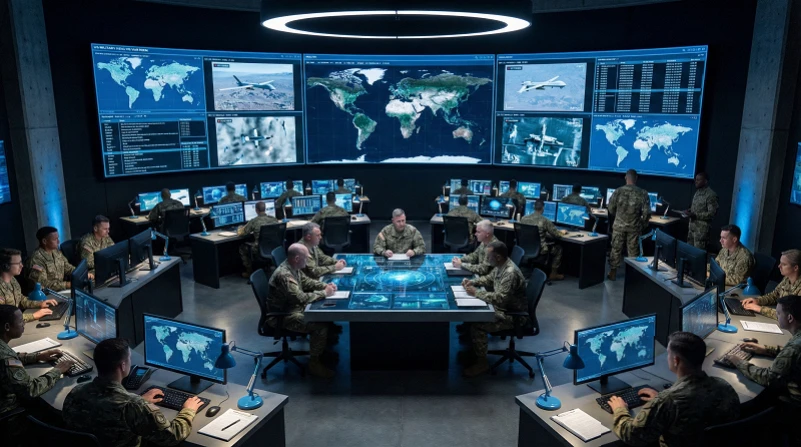
The US military has extensive experience in warfare and intelligence, and they quickly found the most efficient way to address the problem.
There is no need to send commandos or ground reconnaissance troops for high-risk infiltration.
To determine whether these Japanese had betrayed their country, the US military concluded it only needed to determine one simple thing: whether the Japanese research team’s machines were resting at home or working outside.
The Japanese must be wondering where all that fuel goes, right? It can’t be eaten or drunk; its only use is to fuel the engines of these heavy vehicles.
If all these vehicles were detected inside the base, the US military wouldn’t have to waste time arguing with Japan; there’s a good chance the fuel signal was simply a technical malfunction.
However, if there is not a single car at home, then this becomes a big problem.
The problem is, in the Japanese monitored GPS system, these cars appear to be at home and have not moved at all!
So, a military high-altitude reconnaissance plane immediately took off from a base in South America and glided towards the skies of Antarctica.
At that time, down there, the Japanese scientific expedition team was still busy carrying out Wu Bolin’s exploration requirements.
Almost all the cars that could still move had been taken out of the garage, leaving only a few open snowmobiles, as these types of open vehicles could not be driven in very cold weather.
The research team members didn’t even notice when the reconnaissance aircraft arrived above them.
The high-flying aircraft’s engines are almost completely drowned out by the noise of their own mechanical equipment. Furthermore, their radars operate at high power, and their diesel engines operate at full revs to provide sufficient power and electricity.
No one realized that a sophisticated reconnaissance aircraft was flying at high speed over Antarctica in the freezing winter, a time when normally almost no aircraft would dare to fly over.
However, technology can’t be fooled. The aircraft’s thermal imaging system clearly detected numerous unusual heat sources across the frigid Antarctic continent.
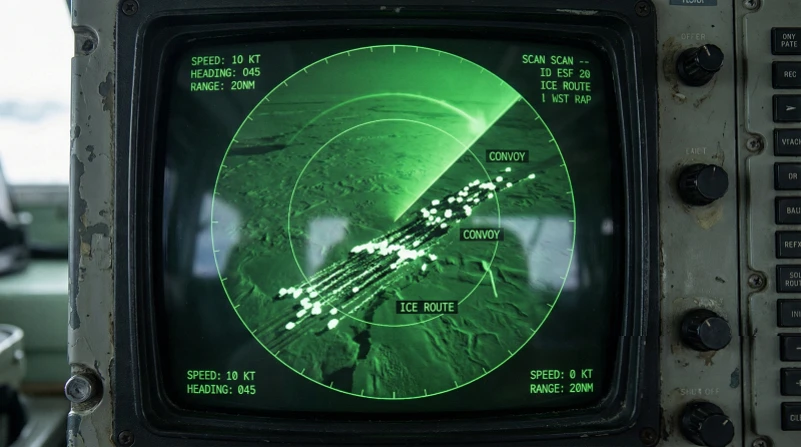
All of those hotspots were mechanical devices operated by the Japanese team at incredible speed.
Shortly afterward, when the images taken by the aircraft were synchronized in real-time with the United States Joint Chiefs of Staff, the commander in charge of the operation experienced a moment of utter shock.
Pointing to various evidence photos on a large screen, he asked in a high-pitched voice, “What exactly did these Japanese research team members do?! They deployed almost every vehicle they had!”
One of his men suddenly exclaimed, summarizing the facts on the screen, “This is very serious, sir. They’ve split into several groups; they’re clearly on a military reconnaissance mission!”
The commander did not hesitate any longer, he immediately gave the order: “Report to the Pentagon immediately!”